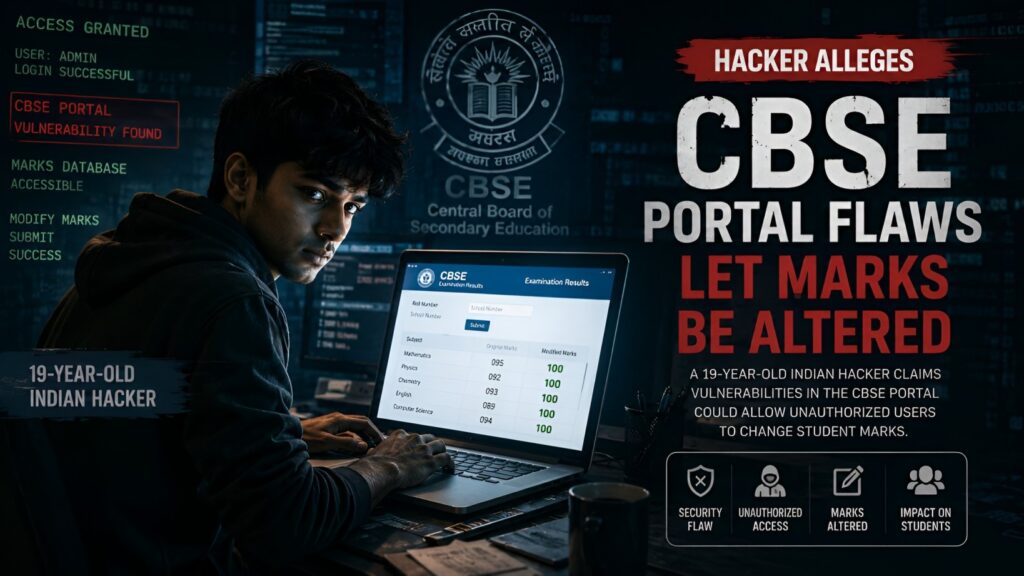
In an era where education systems are rapidly shifting online, cybersecurity has become more important than ever. A recent allegation by a hacker claiming that flaws in the CBSE portal could allow marks to be altered has sparked serious concern among students, parents, and educational authorities across India.
While the Central Board of Secondary Education (CBSE) has not officially confirmed any breach, the claims have triggered debates about digital security, student data protection, and the reliability of online academic systems.
What Is the Allegation About?
According to reports circulating online, a hacker alleged that vulnerabilities within the CBSE digital infrastructure could potentially allow unauthorized users to manipulate student marks. The claim suggests that weak security protocols, improper access controls, or outdated backend systems may have exposed sensitive educational records.
Although there is no public evidence yet proving that marks were actually changed, the allegation itself is alarming enough to raise major cybersecurity concerns.
For millions of students, CBSE marks are not just numbers. They influence college admissions, scholarships, competitive exams, and future careers. Even the possibility of tampering can damage trust in the education system.
Why This Matters So Much
India’s education ecosystem is one of the largest in the world. Every year, CBSE handles academic records for lakhs of students across schools nationwide. Digital portals are now central to:
- Result publication
- Marksheet generation
- Student verification
- Examination management
- Document downloads
If such systems are vulnerable, the consequences can be severe.
Loss of Trust
Students and parents rely on CBSE for fairness and transparency. Allegations of mark manipulation can create panic and confusion, especially during exam result season.
Risk of Data Breach
Educational portals often contain sensitive information including Aadhaar details, phone numbers, addresses, and academic history. A security loophole could expose student data to cybercriminals.
Impact on Student Futures
Even a small unauthorized change in marks can alter rankings, admissions, and career opportunities. This makes educational databases highly sensitive targets.
The Growing Threat of Cybersecurity Attacks in Education
Educational institutions are increasingly becoming targets for hackers worldwide. Many systems still operate on outdated software, weak passwords, or insufficient security monitoring.
Cybersecurity experts often point out common vulnerabilities such as:
- Weak authentication systems
- Lack of multi-factor authentication (MFA)
- Poor encryption practices
- Unpatched software vulnerabilities
- Insecure APIs and databases
Hackers exploit these weaknesses to gain unauthorized access or manipulate records.
India’s rapid digital transformation in education has brought convenience, but it has also increased cyber risks.
What CBSE and Authorities Need to Do
Whether these allegations turn out to be true or false, the incident highlights the urgent need for stronger cybersecurity measures in educational platforms.
1. Conduct Independent Security Audits
CBSE should regularly perform third-party cybersecurity audits to identify and fix vulnerabilities before attackers can exploit them.
2. Implement Strong Authentication
Multi-factor authentication for administrators and schools can significantly reduce unauthorized access risks.
3. Improve Transparency
If vulnerabilities are discovered, authorities should communicate clearly with students and parents rather than allowing misinformation to spread online.
4. Real-Time Monitoring
Advanced monitoring systems can help detect suspicious login attempts, unusual activity, or unauthorized data modifications instantly.
5. Ethical Hacker Collaboration
Many organizations now work with ethical hackers through bug bounty programs. This allows security researchers to report flaws responsibly before criminals exploit them.
Students and Parents Should Stay Alert Too
Cybersecurity is not just the responsibility of institutions. Students and parents should also follow safe digital practices:
- Avoid sharing login credentials
- Verify official websites carefully
- Ignore fake result links
- Use strong passwords
- Enable security alerts whenever possible
Scammers often exploit confusion around exam results to launch phishing attacks.
The Bigger Picture
The CBSE portal controversy is not just about marks. It reflects a larger challenge facing India’s digital infrastructure.
As schools, universities, and government systems become increasingly dependent on technology, cybersecurity can no longer be treated as optional. Strong digital defenses are essential to protect student futures and maintain public trust.
Technology has transformed education for the better, but without robust security, even the most advanced systems can become vulnerable.
Final Thoughts
The allegations surrounding the CBSE portal should serve as a serious reminder for educational institutions across India. Whether or not the claims are ultimately verified, the incident highlights the growing importance of cybersecurity in the digital education era.
Students deserve systems that are secure, transparent, and trustworthy. Protecting academic records must become a top priority — because in today’s digital world, data security is directly linked to educational integrity.