Table of Contents
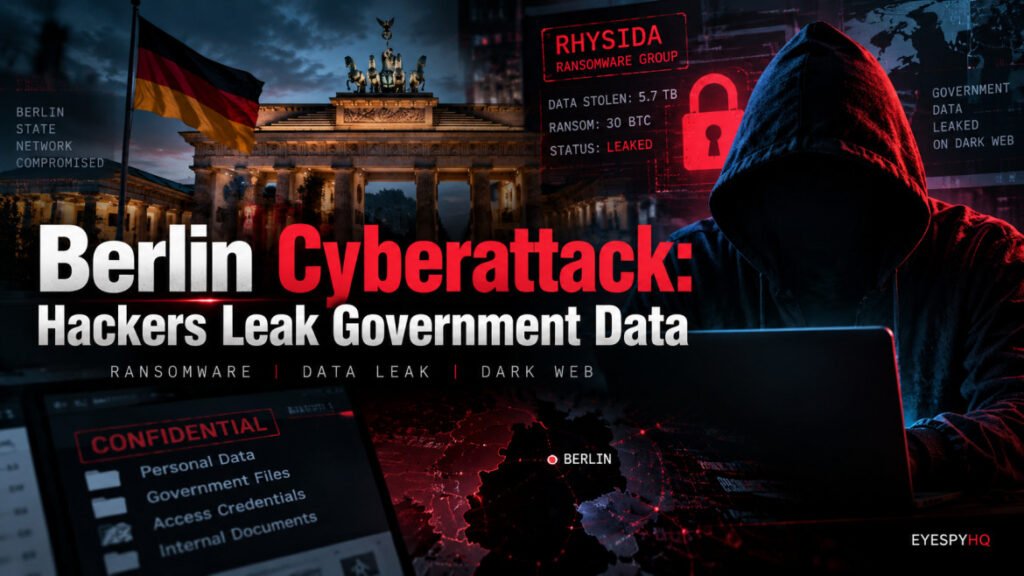
The Berlin cyberattack has escalated after the Rhysida ransomware group published large amounts of stolen data from Berlin’s state network on the dark web. Authorities are investigating the breach and assessing whether employees, citizens and businesses have been affected.
What Happened in the Berlin Cyberattack?
The attack took place between August 7 and August 12, 2026, when attackers gained access to parts of Berlin’s state network and extracted large amounts of data. The incident was discovered on August 14.Two Senate administrations were affected, including departments responsible for construction and urban development, as well as transport and environmental matter.The group calling itself Rhysida claimed responsibility and said it had stolen around 5.7 terabytes of data.
Hackers Demanded 30 Bitcoin
Rhysida demanded 30 Bitcoin, worth roughly €2 million, in exchange for the stolen information.Berlin refused to pay the ransom. After the attackers’ deadline expired, the stolen data was published online. Berlin authorities subsequently launched an intensive forensic investigation to determine the scope and impact of the leak.The publication of the data has created additional cybersecurity and privacy risks.Authorities warned that the stolen material could include personal information belonging to government employees, citizens and businesses. However, investigators are still examining the files, so not every claim about the contents of the dataset has been independently confirmed. Berlin has also warned people not to spread unverified claims about the leaked information
New Data Package Includes Credentials
The incident continued to develop on September 6, when the attackers released another data package that included access credentials, according to Berlin authorities.The affected administration reviewed its security measures and introduced additional precautions. Some government services could experience temporary restrictions as a result. Stolen information can potentially be used in phishing, identity theft, social engineering and account takeover attempts.Attackers could use legitimate-looking information from leaked documents to make fraudulent emails or messages appear more convincing.Potentially affected users should therefore be cautious about unexpected password-reset requests, payment demands, suspicious links and messages asking for personal information.
Berlin has established a dedicated coordination effort to review and assess the published data. IT forensic specialists and security authorities are examining the files to identify affected people and determine what protective measures are necessary. Authorities say people identified as affected will be contacted based on the level of risk. Importantly, Berlin reported on September 8 that some files that initially appeared sensitive did not actually represent a high-security threat. For example, files connected to Germany’s Military Counterintelligence Service were found to concern parking permits.
Berlin Cyberattack: What Happens Next?
The full impact of the Berlin cyberattack is still being assessed. The incident shows how ransomware groups can use stolen data as an extortion tool even when a victim refuses to pay.For Berlin, the immediate priorities are identifying affected data, protecting government systems, notifying affected individuals and strengthening network security.The investigation remains ongoing, and further details may emerge as authorities continue analyzing the leaked files.
what Should Users Do After the Data Leak?
People who may be affected by the Berlin cyberattack should remain cautious about suspicious emails, phone calls and messages. Cybercriminals could potentially use information from leaked files to create convincing phishing and impersonation attempts.Users should avoid clicking unexpected links or opening unknown attachments. Important accounts should have unique passwords and multi-factor authentication (MFA) enabled whenever possible. If a password or access credential may have been exposed, it should be changed immediately.Organizations connected to affected systems should also review account activity, monitor unusual login attempts and disable compromised credentials where necessary. Employees should be particularly careful with unexpected password-reset requests, payment demands and messages appearing to come from colleagues or government officials.The incident also shows why ransomware attacks can remain dangerous even after an organization responds to the initial intrusion. When stolen information is published, criminals can potentially reuse that information for additional scams and social-engineering campaigns.