What is Vibe Hacking? Understanding the Latest Cyber Threat
Vibe hacking represents a sophisticated evolution in cybercrime where fraudsters leverage artificial intelligence to manipulate human emotions, trust, and psychological vulnerabilities. Unlike traditional hacking that targets systems and networks, vibe hacking exploits the human element through AI-generated content, deepfakes, and personalized social engineering attacks.
This emerging threat combines advanced AI technologies with psychological manipulation techniques to create highly convincing scams that bypass traditional security measures. As we navigate 2025, understanding vibe hacking has become essential for protecting yourself in an increasingly AI-driven digital landscape.
How Does Vibe Hacking Work? The Technology Behind the Threat
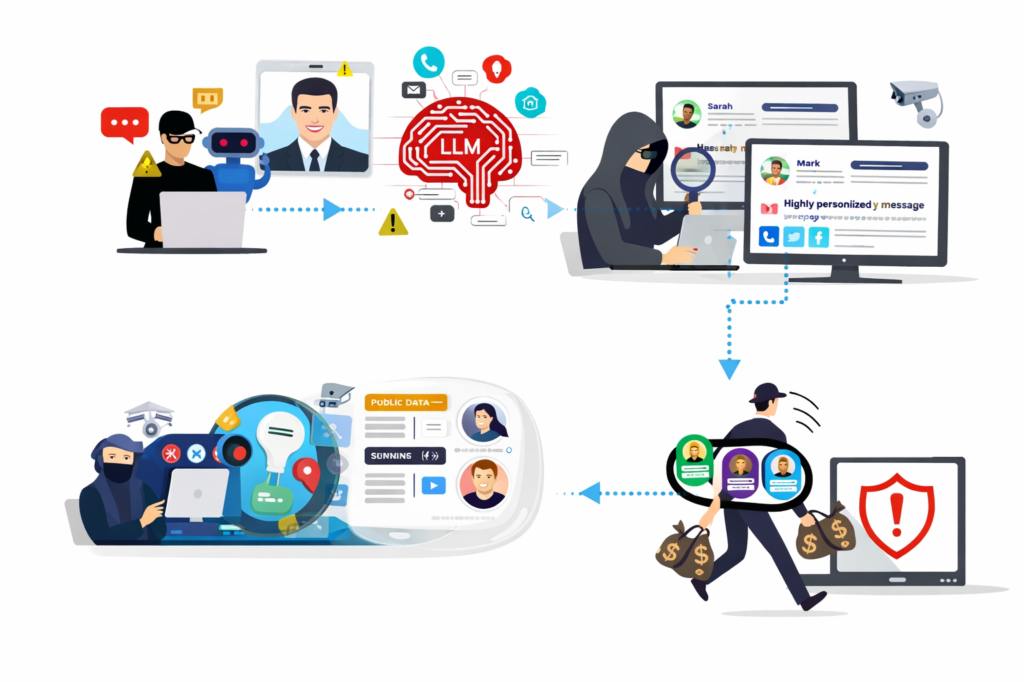
Vibe hacking operates through several AI-powered mechanisms that make detection extremely challenging:
AI-Generated Deepfakes and Voice Cloning Cybercriminals use generative AI tools to create realistic video and audio content that mimics trusted individuals. These deepfakes can replicate your boss’s voice, a family member’s appearance, or even create entirely fictional personas that seem authentic and trustworthy.
Personalized Social Engineering at Scale Modern AI algorithms analyze vast amounts of social media data to understand your interests, communication patterns, and emotional triggers. Fraudsters use this intelligence to craft highly personalized messages that resonate with your specific vulnerabilities, making scams feel legitimate and timely.
Emotional Manipulation Through AI Chatbots Advanced language models create conversational experiences that build rapport and trust rapidly. These AI chatbots can maintain consistent personas across multiple interactions, adapting their approach based on your responses to maximize emotional impact.
Synthetic Identity Creation AI generates complete fake identities with realistic profiles, employment histories, and social connections. These synthetic identities appear legitimate across multiple platforms, making verification nearly impossible through traditional methods.
Real-World Examples of Vibe Hacking Attacks
Understanding how vibe hacking manifests in real scenarios helps you recognize potential threats:
The CEO Voice Scam Employees receive urgent voice messages from their CEO requesting immediate wire transfers. The voice is AI-cloned and perfectly matches the executive’s tone, accent, and speech patterns, creating a false sense of urgency and authority.
Romance Scams 2.0 Scammers create AI-powered dating profiles with generated photos and personalities tailored to match your preferences. The AI maintains consistent conversations over weeks or months, building emotional connections before requesting financial assistance.
Investment Fraud Through Deepfake Endorsements Fraudsters create deepfake videos of celebrities or financial experts endorsing fraudulent investment schemes. These videos appear on social media with convincing production quality, leveraging trust in public figures.
Family Emergency Scams You receive a panicked video call from what appears to be a family member in distress, requesting immediate financial help. The video uses real-time deepfake technology to overlay your relative’s face onto the scammer’s video feed.
The Psychology Behind Vibe Hacking: Why It Works
Vibe hacking succeeds because it exploits fundamental aspects of human psychology:
Trust and Authority Bias We’re hardwired to trust familiar voices and authority figures. When AI perfectly replicates these trusted sources, our natural defenses lower, making us vulnerable to manipulation.
Emotional Hijacking Scammers create artificial urgency, fear, or excitement that bypasses rational thinking. The emotional intensity prevents careful verification and promotes impulsive decision-making.
Confirmation Bias AI-personalized attacks align with your existing beliefs and interests, making the scam feel relevant and legitimate. This confirmation reinforces trust and reduces skepticism.
Social Proof Manipulation Fake reviews, endorsements, and social media engagement created by AI bots generate artificial social proof, making fraudulent schemes appear popular and trustworthy.
How to Protect Yourself from AI-Powered Vibe Hacking
Defending against vibe hacking requires updated security practices that address both technological and psychological vulnerabilities:
Establish Verification Protocols Create predetermined code words or security questions with family members and colleagues for confirming identity during urgent requests. Never rely solely on voice or video verification.
Implement Multi-Channel Authentication When receiving unexpected requests, verify through a different communication channel. If you receive an urgent email, call the person directly using a known phone number, not one provided in the message.
Practice Emotional Awareness Recognize when you’re feeling rushed, pressured, or emotionally manipulated. Legitimate requests rarely require immediate action without proper verification procedures.
Use Advanced Detection Tools Deploy AI detection software that identifies deepfakes, voice cloning, and synthetic media. Many browsers and security suites now include these features as standard protection.
Limit Your Digital Footprint Review privacy settings across social media platforms and reduce publicly available personal information. The less data available, the harder it becomes for AI to create convincing personalized attacks.
Educate Your Network Share information about vibe hacking with family, friends, and colleagues. Awareness remains the strongest defense against these sophisticated social engineering attacks.
Enable Two-Factor Authentication Everywhere Use hardware security keys or authenticator apps for all critical accounts. Even if scammers obtain passwords through vibe hacking techniques, they cannot bypass strong 2FA.
The Future of Vibe Hacking and Cybersecurity: What’s Already Happening
As AI technology continues advancing, vibe hacking will become increasingly sophisticated and difficult to detect. Industry experts predict several emerging trends:
Real-Time Deepfake Interactions Future attacks will use AI that generates convincing deepfakes during live video calls, making real-time verification nearly impossible without advanced technological solutions.
Behavioral Cloning AI will replicate not just appearance and voice, but entire behavioral patterns, including typing rhythms, decision-making styles, and personal quirks that make identification extremely challenging.
Automated Mass Personalization Scammers will deploy AI systems that simultaneously run thousands of personalized vibe hacking campaigns, each tailored to individual victims with minimal human oversight.
Defensive AI Solutions Cybersecurity companies are developing AI-powered detection systems that identify manipulation patterns, analyze emotional triggers, and provide real-time warnings about potential vibe hacking attempts.
Key Takeaways: Staying Safe in an AI-Driven World
Artificial intelligence is transforming cybersecurity at an unprecedented pace—but not always in ways that benefit us. One of the most concerning developments is the rise of “vibe hacking”—a new class of cyberattack that leverages AI to convincingly mimic human identity, behavior, and communication patterns.
What was once considered futuristic is now becoming a present-day threat.
Real-Time Deepfake Interactions Are Already Here
Deepfake technology has moved beyond static videos and edited clips. Today, attackers can generate real-time AI-driven audio and video impersonations during live calls.
There have already been reported incidents where scammers impersonated CEOs or senior executives during virtual meetings to authorize fraudulent transactions. While current systems may still have subtle flaws, the gap is closing rapidly.
Traditional verification methods—like recognizing a voice or face—are no longer reliable on their own.
Behavioral Cloning: Beyond Voice and Appearance
AI is no longer limited to mimicking how someone looks or sounds—it can now replicate how they behave.
By analyzing digital footprints such as emails, chat histories, and online activity, AI systems can learn:
- Writing tone and language patterns
- Response timing and communication style
- Decision-making tendencies
- Personal quirks and habits
This level of behavioral replication makes impersonation attacks significantly more convincing. In some cases, even close colleagues may struggle to detect inconsistencies.
Automated Mass Personalization at Scale
Cyberattacks are also becoming more scalable and efficient. With AI, attackers can now launch thousands of personalized campaigns simultaneously.
Instead of generic phishing emails, victims receive messages tailored specifically to them—using publicly available data from social media, professional profiles, and past interactions.
This shift from “mass spam” to mass personalization dramatically increases success rates, as the communication feels authentic and relevant.
Frequently Asked Questions About Vibe Hacking
What makes vibe hacking different from traditional phishing? Vibe hacking uses AI to create highly personalized, emotionally manipulative content that adapts to individual victims, while traditional phishing relies on generic mass messages.
Can antivirus software protect against vibe hacking? Traditional antivirus provides limited protection since vibe hacking targets human psychology rather than system vulnerabilities. Specialized AI detection tools and security awareness provide better defense.
How can I tell if a video call is a deepfake? Look for inconsistencies in lighting, unnatural eye movements, audio-visual synchronization issues, and unusual requests. When in doubt, verify through alternative channels.
Are certain age groups more vulnerable to vibe hacking? While anyone can fall victim, older adults unfamiliar with AI capabilities and younger users who overshare on social media face increased risks for different reasons.
What should I do if I’ve been targeted by vibe hacking? Immediately cease communication, document all interactions, report to relevant authorities and platforms, alert your network, and consider freezing financial accounts if compromised.z

